Het weerdisplay
Startpagina
Weer Amsterdam
WeerRadar
RegenRadar
TemperatuurRadar
WindRadar
BliksemRadar
Weernieuws
Aanbevolen
Ontdek de app
Weerwidget
Contact
Apps
Startpagina / Weernieuws /

Bomb Cyclones Explained: Causes, Impacts, and the Historic 2021 West Coast Storm

16:54
19 november 2024

Extreme weather explained
What is a bomb cyclone?

The WeatherRadar (left) and WindRadar (right) showing a potentially record-breaking bomb cyclone over North Pacific on Nov. 19, 2024.

Understand bomb cyclones, their rapid intensification, causes and effects. Learn how these powerful storms can bring significant impacts to our daily lives and learn how to stay ahead of them.

A bomb cyclone is a rapidly intensifying mid-latitude storm characterized by a significant drop in atmospheric pressure. Specifically, it occurs when a cyclone's central pressure decreases by at least 24 millibars within 24 hours, a process known as bombogenesis.

This rapid intensification often results from the collision of contrasting air masses, such as cold continental air meeting warm oceanic air, leading to severe weather conditions, including strong winds, heavy precipitation and coastal flooding.

A notable example of a bomb cyclone impacting the U.S. West Coast occurred in October 2021. This powerful storm underwent explosive intensification, reaching a minimum central pressure of 942 millibars, making it one of the most intense systems recorded in the Northeast Pacific.

Weather Alerts: Are yours on? lees meer

The cyclone brought heavy rainfall, strong winds, and significant flooding to parts of California and the Pacific Northwest, disrupting transportation and causing widespread power outages.

Due to their extreme nature and rapid intensification, bomb cyclones can be challenging to forecast. However, staying informed is crucial. With the Weather & Radar app, you can stay ahead of these powerful storms by signing up for Weather Alerts. Tap the link above to learn more.

Federico Di Catarina
Meer over het onderwerp
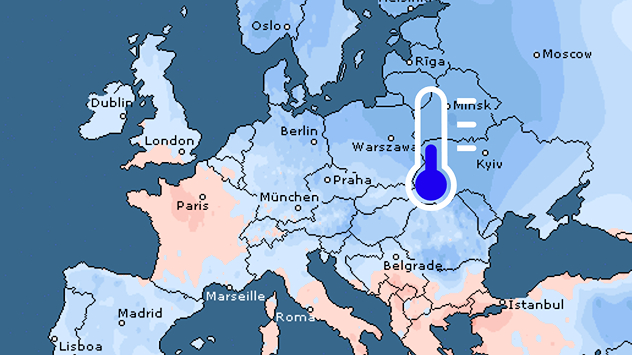
Kaart van Europa met kleurweergave van de gemiddelde maximumtemperaturen in januari. Koudere regio's zijn blauw gemarkeerd, mildere gebieden roodachtig.
dinsdag 10 februari 2026

Wereldwijd echter warm

Europa: koudste januari sinds 2010
vrijdag 27 februari 2026

Mooie start van de lente

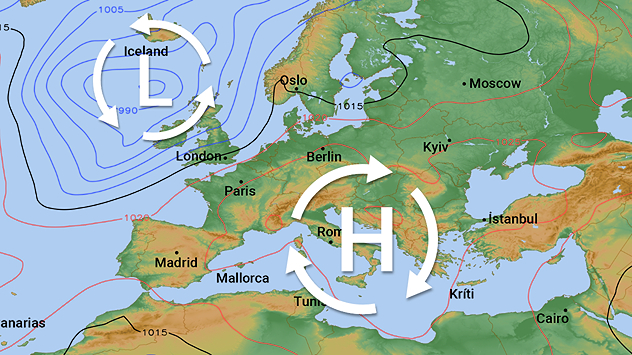
Hogedrukweer in grote delen van Europa
vrijdag 13 februari 2026

Winterweer

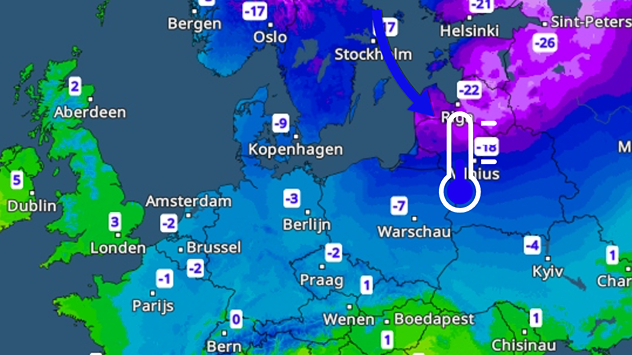
Vorst en sneeuw in delen van Europa
Alle weernieuwsberichten
Ook interessant
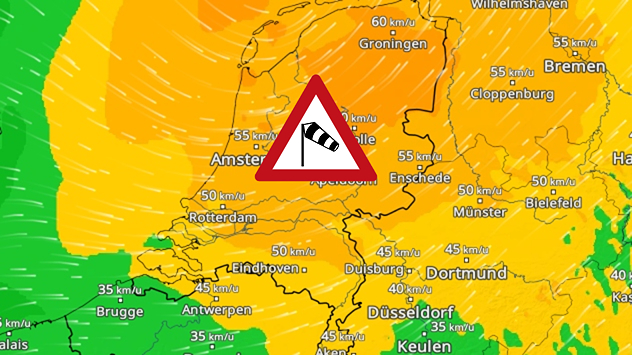
De weerkaart voor zaterdagmiddag toont een stevig windveld over het hele land.
zaterdag 28 februari 2026

Storing trekt langs

Zaterdag buien en veel wind
dinsdag 24 februari 2026

Ook daarna niet koud

Woensdag tot 20 graden op de thermometer
zondag 1 maart 2026

Meer warmte en licht

Meteorologische lente van start gegaan
Alle berichten
Weer & Radar
NL
Clima & Radar Brasil
Hava durumu & Radar Türkiye
Időjárás és Radar Magyarország
Καιρός & Ραντάρ Ελλάδα
Météo & Radar Belgique (Français)
Météo & Radar France
Meteo & Radar Italia
Meteo & Radar România
Météo & Radar Suisse (Français)
Meteo & Radars Latvija
OrasOnline Lietuva
Počasí & Radar Czechia
Počasie & Radar Slovensko
Pogoda & Radar Polska
Погода & Радар Україна (українська)
Tempo & Radar Portugal
Tiempo & Radar Argentina
Tiempo & Radar España
Vejr & Radar Danmark
Vreme & Radar Slovenija
Vreme & Radar Srbija
Vrijeme & Radar Bosna
Vrijeme & Radar Crna Gora
Vrijeme & Radar Hrvatska
Време & Радар България
Времето & Радар Macedonia
Weather & Radar India (English)
Weather & Radar Ireland
Weather & Radar United Kingdom
Weather & Radar USA (English)
Weather & Radar USA (Español)
Weer & Radar België (Nederlands)

Weer & Radar is ook beschikbaar op

Google Play StoreApp Store

Bedrijf

Contact Privacy Policy Colofon Toegankelijkheidsverklaring

Diensten

Uploader

Socials

facebooktwitteryouTubelinkList